As electric vehicles (EVs) gain popularity, understanding battery charging conditions becomes essential. A crucial question arises: what is the best temperature for charging EV batteries? According to a study by the National Renewable Energy Laboratory, lithium-ion batteries perform optimally between 20°C and 25°C. Charging within this range can enhance battery lifespan and efficiency.
However, extreme temperatures pose challenges. Charging at low temperatures, below 0°C, slows down the chemical reactions inside the battery. This can lead to longer charging times and reduced capacity. Conversely, hot conditions above 30°C can cause overheating, potentially damaging battery cells. A report from the Institute of Electrical and Electronics Engineers highlights these risks, emphasizing the need for proper temperature management during charging.
Understanding these factors is vital for EV users. It’s not just about convenience; it affects performance and longevity. By monitoring ambient conditions and charging practices, users can ensure their EV batteries operate efficiently. This knowledge helps drivers in making informed decisions and reflects a growing concern for sustainability and energy efficiency in transportation.
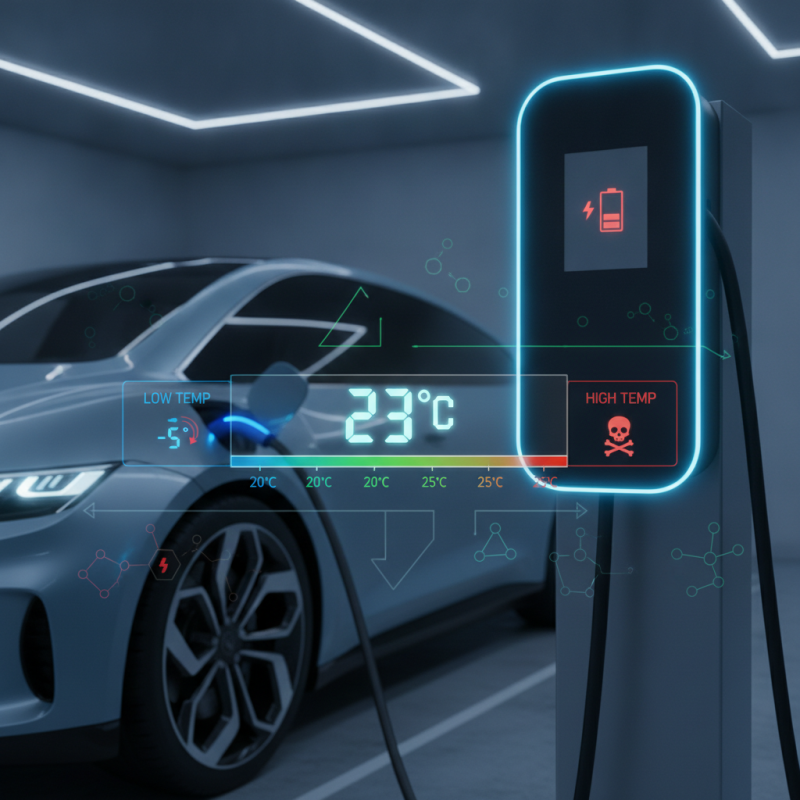
Temperature significantly affects the performance and lifespan of electric vehicle (EV) batteries. Research shows that lithium-ion batteries, commonly used in EVs, perform best between 20°C and 25°C. When temperatures drop below 0°C, charging efficiency can decrease by up to 30%. Conversely, high temperatures can accelerate battery degradation. A study indicates that a battery's lifespan may decrease by 20% for every increase of 10°C above 25°C.
Charging EVs in extreme temperatures poses challenges. Cold conditions slow down chemical reactions in batteries, leading to longer charging times. At elevated temperatures, batteries may overheat, triggering safety mechanisms that slow or halt charging. Understanding these impacts is essential for optimizing charging routines.
Tips:
When it comes to charging electric vehicle (EV) batteries, temperature plays a vital role in performance and longevity. Experts agree that the optimal temperature range for charging is typically between 15°C to 25°C (59°F to 77°F). At these temperatures, batteries charge efficiently and safely. However, charging outside this range can lead to issues. Extreme temperatures can reduce charging speed and even cause damage over time.
Batteries can struggle in cold conditions. Below 0°C (32°F), lithium-ion batteries may not charge at all. As a driver, you might notice a significant drop in range during winter months. On the other hand, high temperatures above 35°C (95°F) can accelerate battery degradation. Prolonged exposure to heat stresses the battery, risking shorter lifespan. Observing these temperature limits is critical for maintaining battery health.
While charging at optimal temperatures can enhance performance, many factors influence actual conditions. Often, people overlook these details. Real-world circumstances, like outdoor climate and the vehicle's location, matter significantly. Sometimes, charging during peak temperatures seems unavoidable. Regularly monitoring your battery's environment can lead to better care and improved life span. Balancing convenience with attention to temperature can make a noticeable difference in battery performance.
| Temperature Range (°C) | Charging Efficiency (%) | Battery Lifespan Impact |
|---|---|---|
| 0 to 10 | 60 | Negative |
| 10 to 20 | 70 | Neutral |
| 20 to 30 | 90 | Optimal |
| 30 to 40 | 85 | Slightly Negative |
| Above 40 | 50 | Highly Negative |
When charging electric vehicle (EV) batteries, temperature plays a crucial role. Extreme temperatures can significantly affect charging efficiency. Low temperatures can cause batteries to charge more slowly. They may not accept a full charge, and this can affect performance. In cold weather, you might find your EV takes longer to reach a full charge. This can be frustrating for drivers.
High temperatures can lead to different problems. Overheating can damage battery chemistry. It can also cause a reduction in battery life. Charging in hot conditions can increase the risk of thermal runaway. This is a dangerous situation where the battery could catch fire.
Understanding your local climate can help manage these issues. In cold climates, consider pre-conditioning your vehicle. This means warming up the battery before charging. In warmer areas, avoid charging in direct sunlight. Monitoring battery temperature can also aid in better charging practices. Awareness of these factors is key to maintaining battery health. The right practices make a significant difference in battery performance.
This chart illustrates how the charging efficiency of electric vehicle (EV) batteries varies with different temperature levels. It highlights that moderate temperatures yield the best charging performance, while extreme temperatures can hinder efficiency significantly.
Charging electric vehicle (EV) batteries in varying environmental conditions requires careful consideration. Temperature plays a crucial role in battery performance and longevity. According to a study by the U.S. Department of Energy, charging batteries in extreme heat can reduce their lifespan by up to 30%. In colder climates, battery efficiency drops significantly. Below 32°F (0°C), charging rates can slow, potentially resulting in incomplete charging cycles.
Best practices involve adjusting charging habits based on temperature. In hot weather, drivers should avoid charging during peak sun hours. Instead, opt for early mornings or late evenings. Keeping the EV in shaded areas or garages can also help maintain optimal battery temperatures. In contrast, in temperatures below freezing, preconditioning the battery before charging is advisable. This means warming up the battery while still plugged in to enhance performance.
Monitoring battery temperature is essential. Some EVs have built-in systems for this purpose. Regularly checking local temperature conditions can guide EV owners in making informed decisions about charging times. Understanding these environmental factors can optimize battery health and performance significantly.
Temperature management is critical in EV battery technology. Reports indicate that optimal charging occurs at 25°C. At this temperature, lithium ions move efficiently, leading to faster charging and better battery life. As temperatures rise or fall, ion mobility decreases. Research shows that charging at higher temperatures can increase degradation rates.
Future trends in temperature management focus on advanced materials. Solid-state batteries are gaining attention. They promise better thermal stability. Data from a recent industry report suggests these batteries could withstand temperatures up to 60°C without a significant performance drop. However, challenges remain in manufacturing and scalability.
Heating and cooling systems for EV batteries are evolving. Innovative solutions are being explored to maintain ideal temperatures during charging. Active thermal management can enhance battery life by 30%. This may lead to longer-range EVs. Yet, high costs and complexity require careful consideration. The industry must balance performance and affordability.
: Temperature significantly influences battery performance. Optimal performance is between 20°C and 25°C.
Cold temperatures can reduce charging efficiency by up to 30%. Longer charging times are common in low temperatures.
Yes, high temperatures can cause overheating. This may lead to battery damage and a reduced lifespan.
Thermal runaway is a dangerous condition. It occurs when a battery overheats, possibly leading to fire.
Charge in a moderate environment and monitor battery temperature. Avoid fast charging during extreme weather.
Pre-conditioning involves warming up the battery before charging. This can improve charging efficiency in colder weather.
Solid-state batteries show promise for better thermal stability. They could withstand temperatures up to 60°C without performance issues.
Active thermal management can enhance battery life by up to 30%. This technology helps maintain optimal charging conditions.
Manufacturing and scalability of new materials are significant challenges. The industry needs to balance performance and manufacturing costs.
Understanding local climate impacts charging habits. It helps in planning, leading to better battery health and performance.
The optimal temperature for charging EV batteries is a critical factor influencing their performance and longevity. Understanding the impact of temperature is essential for maximizing charging efficiency. Typically, the ideal temperature range for charging EV batteries is around 20°C to 25°C (68°F to 77°F). At this range, batteries experience minimal stress, leading to better capacity retention and reduced degradation over time.
Charging in high or low temperatures can significantly hinder battery performance, either by slowing down the chemical reactions or causing thermal runaway, respectively. Therefore, employing best practices such as avoiding extreme temperature conditions and using temperature management systems can enhance charging efficiency. As the industry evolves, advancements in battery technology and improved temperature management strategies are expected to emerge, ensuring safer and more efficient charging experiences for EV users. Thus, when considering "What is the best temperature for charging EV batteries?", a balanced approach that maintains optimal temperature conditions becomes key to optimal battery health.

NexBolt Charger