How to Improve Industrial Charging Efficiency

Time:2026-11-02 Author:Oliver
0%

Industrial charging affects more than the electricity bill. Charger losses, battery temperature, shift patterns, and peak demand all shape operating costs. The International Energy Agency’s Tracking Clean Energy Progress 2023 estimates that industry accounts for roughly 37% of global energy consumption. Even modest efficiency gains can therefore matter at scale.

How to improve the efficiency of industrial charging starts with measurement, not equipment replacement. Record charger input energy, battery output, charging time, and idle periods across representative shifts. A warm charger cabinet, a battery repeatedly left at full charge, or several forklifts charging during the same demand peak can reveal practical opportunities. Small details count.

The U.S. Department of Energy’s 2022 Industrial Decarbonization Roadmap emphasizes efficiency and electrification as important routes to reducing industrial energy use and emissions. For charging operations, that means comparing charger performance, matching power to battery requirements, coordinating charging with production schedules, and maintaining cables and connectors. Use manufacturer specifications and measured site data; nominal efficiency alone can mislead.

There is no universal fix. Older equipment, uneven workloads, and limited electrical capacity can complicate upgrades. A carefully monitored pilot may expose issues before a full rollout. It may also show that the expected savings were overstated. This guide examines the main improvement options, the measurements that make comparisons credible, and the trade-offs facility teams should assess before investing.
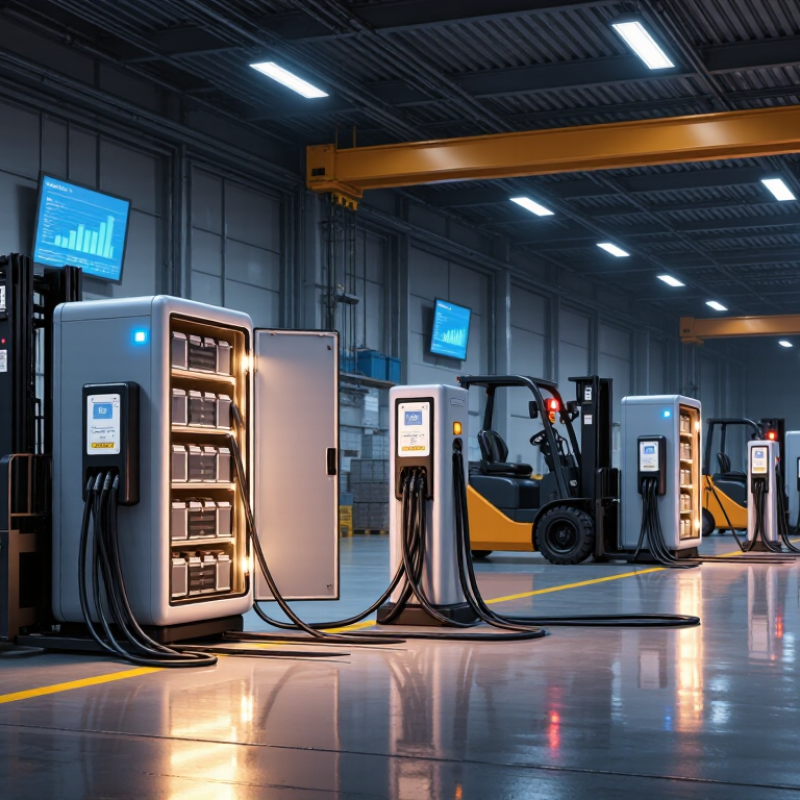
How to Improve Industrial Charging Efficiency

Assessing Industrial Charging Needs and Existing Infrastructure

Assessing Industrial Charging Needs and Existing Infrastructure

Before changing an industrial charging setup, document how equipment is actually used. Record vehicle or machine types, battery capacity, shift schedules, and charging windows. Compare energy demand with the time available between tasks. A forklift returning with a low battery at 10 a.m. creates a different need from one parked overnight. Small details matter, including cable routes, ventilation, and where operators leave equipment. Measure before buying.

Then inspect the electrical supply, not just the chargers. Confirm available capacity, panel condition, connection points, and peak site demand with a qualified electrical professional. Check whether chargers share circuits with production equipment, and note any recurring trips or overheating. A site may have enough total power but still lack capacity during shift changes. That distinction is easy to miss. One practical assessment is to log charging activity and site load across several normal workdays, including a busy day. The data may contradict staff estimates, and that is useful. Document access constraints, maintenance needs, and planned expansion too. An assessment is only a snapshot; revisit it when shifts, equipment, or production volumes change.

How to Improve Industrial Charging Efficiency - Assessing Industrial Charging Needs and Existing Infrastructure
Equipment Group Fleet Size Typical Battery Capacity Daily Grid Energy Main Charging Window Installed Chargers Estimated Simultaneous Load Infrastructure Assessment
Electric forklifts 40 24 kWh per vehicle 1,090 kWh Between shifts and overnight 20 × 8 kW Up to 160 kW Review charger scheduling; stagger charging to limit peak demand.
Electric pallet trucks 10 2.5 kWh per vehicle 80 kWh Breaks and end of shift 8 × 1.5 kW Up to 12 kW Check outlet condition and avoid connecting chargers to heavily loaded circuits.
Automated guided vehicles 12 15 kWh per vehicle 190 kWh Short opportunity charges during operation 6 × 6 kW Up to 36 kW Compare charging windows with production cycles; verify connection availability at charging points.
Electric tow tractors 6 20 kWh per vehicle 140 kWh End of shift and overnight 3 × 7 kW Up to 21 kW Assess whether the number of charging positions supports the shift handover schedule.
Electric scissor lifts 8 4 kWh per vehicle 75 kWh Overnight or during planned downtime 8 × 1.2 kW Up to 9.6 kW Confirm that charging locations are accessible and protected from workplace traffic.
Shared charging area — — 1,575 kWh total per day Multiple shifts 45 charging points Approximately 239 kW if all listed chargers operate at full output Compare measured site peaks and spare electrical capacity with coincident charger demand; use load management if needed.

Assessment note: Figures are representative planning estimates for an industrial site, not measured facility data. Validate fleet energy use, charger ratings, operating schedules, panel capacity, and peak demand using equipment records and site measurements before making upgrades.

Selecting Chargers for Equipment, Battery, and Duty-Cycle Requirements

Charger selection starts with the equipment, not the charger’s advertised output. Check the battery’s nominal voltage, chemistry, capacity, and manufacturer-approved charging limits. Then confirm the machine’s connector and onboard charging restrictions. A charger that fits physically may still deliver an unsuitable charging profile. Small details matter.

Duty cycle changes the best choice. A forklift running one long shift may have a planned charging window, while equipment used in short bursts may need brief top-ups between tasks. Match charger current to the battery’s permitted rate and the time available. For example, a 400 Ah battery charged at 40 A needs roughly ten hours in ideal conditions; real charging takes longer as the process slows near full capacity. Heat changes the picture. High ambient temperatures, poor ventilation, or repeated fast charging can affect battery life, so review temperature limits and cooling needs.

Look at the whole charging area, too: available power, cable reach, dust, moisture, and traffic around the station. Maintenance records can reveal whether low charge, long waits, or frequent connector damage is reducing uptime. A short trial across a normal work week is useful. Track charge times, battery temperature, and missed shifts, then adjust. A tidy spreadsheet may still miss an operator’s rushed connection or an unusually heavy workday. Recheck the choice when equipment use or battery capacity changes.

Optimizing Power Distribution, Charging Locations, and Load Management

How to Improve Industrial Charging Efficiency
Optimizing Power Distribution, Charging Locations, and Load Management

Industrial charging works best when power, equipment, and operating routines are planned together. Start by mapping each charger’s demand against the facility’s available electrical capacity. A qualified electrical professional can check circuit ratings, cable distances, and expected peak loads before equipment is added. This helps prevent overloaded circuits and avoidable power bottlenecks. Small details matter.

Charging locations should fit the movement of people and equipment. Place chargers near regular parking or staging areas, but keep access routes, exits, and work zones clear. Measure cable reach in real operating conditions, including where vehicles stop and turn. A charger that is technically close may still be awkward to use. Watch a shift change; congestion can appear in minutes.

Load management can spread charging across the day instead of starting every unit at once. Stagger start times, prioritize equipment needed for the next shift, and use charging windows during lower-demand periods where practical. Track charging duration, missed charge sessions, and peak power use for several weeks. The data may challenge initial assumptions. For example, a “quiet” overnight period might still include cleaning equipment or refrigeration loads. Review schedules with operators, then adjust one change at a time and record the effect.

Improving Charging Schedules and Operator Practices

How to Improve Industrial Charging Efficiency
Improving Charging Schedules and Operator Practices

A reliable charging plan starts with actual shift patterns, not an idealized timetable. Record when each vehicle or machine returns, its state of charge, and its next departure time. A simple log near the charging area can reveal idle periods and last-minute queues. Small changes matter. Stagger charging starts so several units do not draw power at once, while keeping enough reserve for unexpected work. Prioritize equipment needed at shift change. Avoid charging every unit to full when the next task requires less, provided the equipment guidance allows it.

Operators need procedures they can follow during a busy handover. Use a visible checklist for connector inspection, cable placement, charging status, and fault reporting. Train staff to report damaged plugs or unusual heat rather than attempt improvised repairs. Keep walkways clear, and mark parking positions so cables do not cross traffic routes. These habits can reduce delays and help protect equipment.

Review the schedule weekly against actual use and charging records. Compare planned departure times with real ones, then ask operators where queues formed. Data may be incomplete; handwritten entries are sometimes skipped during peak periods. That limitation deserves attention. Adjust one part of the plan at a time, such as charging windows or handover checks, and track whether missed departures change. Workloads shift seasonally, so a schedule that worked last month may now create a bottleneck.

Monitoring Performance and Maintaining Charging Systems

Industrial charging efficiency depends on more than charger output. Track energy delivered, charging time, idle periods, and fault events for each unit. Compare these readings across shifts, not just across a full month. A charger that sits unused during a busy shift may signal a scheduling problem, even when its technical performance looks normal.

Measure current and voltage at regular intervals, and review connector temperatures and recurring alarms. Small changes matter. A gradual rise in charging time can point to a worn connection, restricted airflow, or a sensor that needs checking. Our first dashboard looked precise, but it hid short interruptions inside daily averages. Breaking the data into individual sessions revealed the pattern. It is easy to trust a clean chart too much.

Pair monitoring with practical inspections. Look for cracked cable jackets, loose connectors, dust around ventilation openings, and signs of heat discoloration. Keep records. Note the date, observed condition, repair, and follow-up reading so teams can spot repeat failures. Use maintenance intervals suited to the equipment and operating environment, and follow the manufacturer’s service instructions. Qualified technicians should handle electrical testing and repairs. Data can guide attention, but it cannot replace a careful inspection. A missed note still happens sometimes; make the record easy to complete during a busy shift.

FAQS

What information should a site record before changing its charging setup?

Record machine types, battery capacity, shift schedules, and charging windows. Note cable routes and where equipment is parked. Measure before buying.

Why inspect the electrical supply as well as the chargers?

Confirm panel condition, connection points, available capacity, and peak site demand with a qualified electrical professional. Shared circuits may trip during shift changes.

How can a site understand its actual charging demand?

Log charging activity and site load across several normal workdays, including a busy day. Staff estimates may be off. Data can disagree.

What battery details matter when selecting a charger?

Check nominal voltage, chemistry, capacity, approved charging limits, connector type, and onboard restrictions. A physical fit is not enough.

How should charging time affect charger selection?

Match charger current to the battery’s permitted rate and the available window. A 400 Ah battery at 40 A needs roughly ten ideal hours. Real charging takes longer near full capacity.

What changes when equipment needs frequent short top-ups?

Short charging windows may need a different setup than overnight charging. Track missed shifts and wait times during a normal work week. The picture may be incomplete.

What conditions around the charging station should be checked?

Check cable reach, ventilation, dust, moisture, and nearby traffic. Heat and poor airflow can affect battery life. Small details matter.

When should a charging assessment be repeated?

Revisit it when shifts, equipment, battery capacity, or production volumes change.

Conclusion

How to improve the efficiency of industrial charging begins with understanding how equipment is used, what its batteries require, and where existing power capacity may be constrained. Choosing chargers that match battery types, charging rates, and duty cycles can reduce wasted time and avoid unnecessary strain on equipment. Thoughtful placement of charging stations, balanced power distribution, and load management can also make charging more accessible without creating peak-demand bottlenecks.

Effective schedules should fit operational shifts and allow operators to follow consistent charging practices. Regularly monitoring charge times, energy use, and battery performance helps identify delays or emerging problems. Routine inspection and maintenance of chargers, connections, and charging areas can keep the system reliable. Together, these steps create a safer, better-organized charging process that supports equipment availability and helps operations use energy more effectively.

Oliver

Oliver

Oliver is a seasoned marketing professional with a wealth of expertise in driving brand awareness and engagement. With a deep understanding of our company's product offerings, he consistently delivers high-quality content that enriches our professional blog. His insights not only shed light on......