How to Wire Multiple Batteries for Parallel Charging 2026?

Time:2026-10-17 Author:Mason
0%

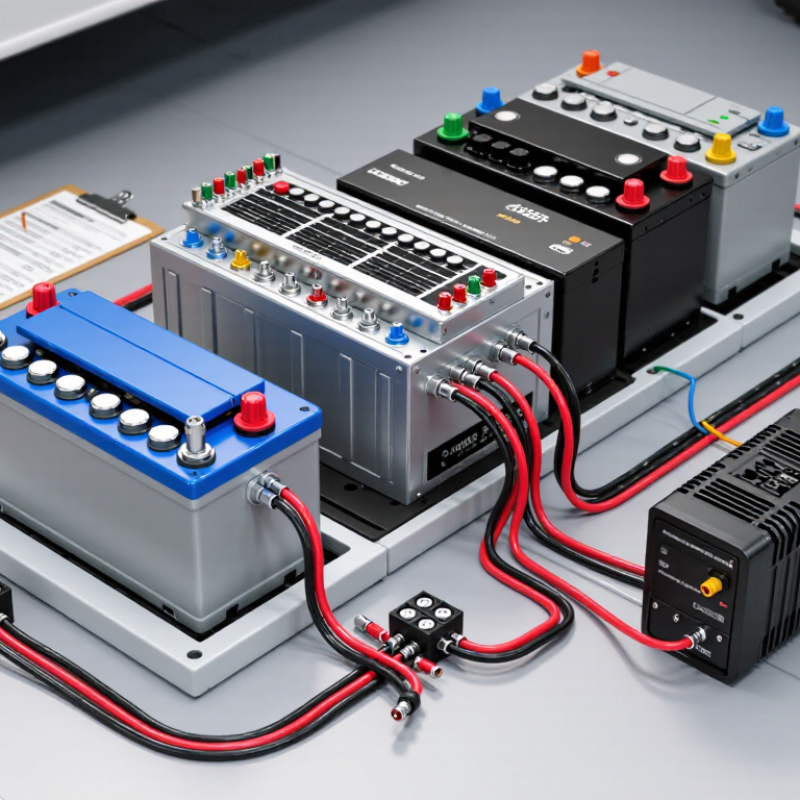
How to wire multiple batteries for parallel charging is a practical question for solar systems, RVs, boats, and backup power banks. In 2026, more users are combining lithium, AGM, and other battery types. The wiring may look simple, but small mistakes can create uneven charging, overheated cables, or premature battery failure.

Battery educator Will Prowse is widely known for explaining practical battery systems. His clear principle is: “Parallel batteries increase capacity, but not voltage.” That sentence defines the foundation of this guide. Batteries connected in parallel keep the same voltage while increasing available amp-hours. However, matching battery chemistry, age, capacity, and charging limits remains essential. Mixing different batteries is tempting. It is also where many installations become unreliable.

This introduction will examine cable sizing, fuse placement, busbars, charger connections, and balanced current paths. It will show why equal-length cables often matter. A short, thick cable can carry more current than a thin, damaged one. Every connection deserves attention. Loose terminals can become hot beneath insulation, where problems remain invisible.

Real installations are rarely perfect. Battery spaces may be narrow, and manufacturer instructions can conflict. I have found that careful measurement prevents more trouble than confident guessing. The guide will therefore include inspection points, simple diagrams in words, and practical checks before charging begins. Safety must remain the priority. When battery specifications are unclear, a qualified technician should verify the design before energizing the bank.
How to Wire Multiple Batteries for Parallel Charging 2026?

Match Battery Voltage, Chemistry, Capacity, and State of Charge Before Wiring

How to Wire Multiple Batteries for Parallel Charging 2026?

Match battery voltage, chemistry, capacity, and state of charge before wiring. Parallel charging only works safely when every battery has the same nominal voltage. A 12-volt battery bank needs 12-volt batteries, not a mixture of 12-volt and 24-volt units. Do not combine lithium, AGM, gel, or flooded batteries. Their charging limits and internal behavior differ.

Capacity matters too. Batteries with similar amp-hour ratings usually share current more evenly. Large differences can force the smaller battery to charge or discharge harder. Use batteries with similar age and condition when possible. Check resting voltage after the batteries sit disconnected for several hours. For lithium batteries, voltage alone may not show state of charge accurately. Use the battery monitor or approved management system. Keep the charge levels close before connecting them.

Small details matter. Use equal-length, same-gauge cables from each battery to common busbars. Install suitable protection near every positive terminal. Confirm polarity with a meter before making the final connection. The charger must match the battery chemistry and total bank capacity. Charging current adds together, but the charger still needs a safe limit. Keep flooded batteries ventilated and inspect terminals for heat, looseness, or corrosion.

I once assumed matching voltage was enough. It was not. One older battery warmed noticeably during charging. Disconnect the bank and investigate any unusual heat, smell, swelling, or voltage difference. Parallel wiring can hide a weak battery until it affects the entire bank.

Size the Charger: Lead-Acid Banks Commonly Use About 0.1–0.2C

When wiring multiple lead-acid batteries for parallel charging, size the charger from the bank’s total amp-hour capacity. A common working range is 0.1–0.2C. For a 400Ah bank, that means about 40–80A during the bulk stage. Battery University’s BU-201 technical guidance describes similar charging-rate limits for lead-acid chemistry. Higher current may shorten charging time, but it can increase heat, gassing, and plate corrosion when ventilation or temperature control is poor.

Keep it conservative.

The charger must match the battery manufacturer’s voltage profile, not only the amp-hour rating. IEEE 450-2020 and IEC 62485-2 emphasize temperature monitoring, ventilation, and safe battery installation. Each parallel string should use equal-length cables, secure terminals, and suitable overcurrent protection. Measure the bank. A clamp meter can reveal unequal current sharing, especially when batteries have different ages or internal resistance. In my own earlier setups, I focused too much on charger output and overlooked cable imbalance. That mistake caused one battery group to warm noticeably faster. A 0.2C setting is not automatically better. Begin near 0.1C, check charging temperature, and confirm that absorption current tapers normally. Leave space around each battery, and inspect electrolyte levels where applicable. Parallel charging looks simple, but small resistance differences become significant across a large bank.

How to Wire Multiple Batteries for Parallel Charging in 2026

Lead-Acid Charger Sizing at 0.1–0.2C

For identical lead-acid batteries wired in parallel, the bank capacity is the sum of the individual amp-hour ratings while the system voltage remains unchanged. A commonly used planning range is approximately 0.1C to 0.2C of the total bank capacity.

The chart shows the corresponding charger-current range for typical parallel battery banks. For example, a 400 Ah bank may use approximately 40–80 A for this sizing range. Confirm the final charging current, voltage, temperature compensation, and battery specifications before installation.

Wire the Parallel Bank with Equal-Length Cables and a Shared Busbar

How to Wire Multiple Batteries for Parallel Charging in 2026?

Parallel batteries should connect through a shared busbar, not by chaining one battery across another. Use cables with equal length, gauge, and terminal style. This keeps resistance similar across each branch. Current can then divide more evenly. Mismatched cables may make one battery work harder than its neighbors. That imbalance is easy to miss during a quick inspection.

Place the busbars close to the battery bank. Connect each battery’s positive terminal to the positive busbar. Repeat the arrangement on the negative side. Install correctly rated overcurrent protection near every positive battery connection.

Confirm that the busbar rating exceeds the charger and load requirements. Keep cables supported, protected from sharp edges, and firmly secured.

Use batteries with matching voltage, chemistry, capacity, and similar age. Before connection, measure their resting voltages separately. A large difference needs investigation. Do not assume the charger will correct poor wiring.

I would also check terminal temperature during the first charging cycle. Warmth can reveal loose connections or uneven current sharing. This step takes minutes, but it often exposes problems that calculations overlook. Recheck torque after several cycles, because vibration and thermal expansion can loosen hardware. Parallel systems are simple in theory, yet small installation details decide their reliability.

Fuse Every Battery: Place Each Positive Fuse Within 18 Inches of the Bus

How to Wire Multiple Batteries for Parallel Charging 2026?

Parallel batteries can deliver extreme fault current, even when each unit appears modest.

Install one fuse on every positive cable, within 18 inches of the positive bus. Treat 18 inches as the maximum, not the target. A shorter distance is safer.

If a cable rubs against metal, its insulation can fail before a shared fuse reacts. Each fuse must match the cable’s ampacity and interrupt rating, not simply the battery’s capacity.

The National Fire Protection Association’s Electrical Fires report recorded about 32,000 U.S. home fires annually involving electrical distribution and lighting equipment during its 2016–2020 study period.

That evidence supports disciplined overcurrent protection, including in compact battery compartments.

Use matching batteries, equal-length conductors, and secure lugs. Keep positive cables separated from sharp edges. Label every fuse clearly.

Do not place one large fuse only after the bus. That leaves individual battery cables exposed.

A technician should verify polarity, torque, cable temperature, and voltage drop under charging load.

The American Boat and Yacht Council’s E-11 guidance also emphasizes overcurrent protection near power sources, though exact installation limits depend on the system.

I would not assume a fuse is correct because it fits. Check manufacturer instructions and applicable electrical codes.

Small installation shortcuts remain easy to miss.

Commission Safely: Check Current Sharing and Monitor Connection Temperature

How to Wire Multiple Batteries for Parallel Charging 2026?

Parallel battery charging can look simple, but safe commissioning requires careful measurement. Use batteries with matching chemistry, capacity, age, and charge limits. Confirm every battery accepts the charger’s voltage and current range. Connect positive and negative leads with equal lengths and similar resistance. This helps each battery share current more evenly. Install suitable overcurrent protection close to each battery. Keep terminals clean, tight, and protected from accidental contact.

Measure charging current at each branch with a calibrated clamp meter. Do not assume equal cable size guarantees equal current. One battery may draw much more because of internal resistance or a weaker connection. Record readings after charging begins, then repeat them near the end. Large differences need investigation before continued operation. A simple visual check is not enough. I have learned not to trust it.

Monitor connection temperature during the first commissioning cycle. Place temperature sensors, or use an infrared thermometer, on lugs, fuses, busbars, and cable ends. Check them after ten minutes, then at regular intervals. Warmth that keeps rising indicates resistance, loose hardware, corrosion, or excessive current. Stop charging if a connection becomes unusually hot, smells sharp, discolors, or softens nearby insulation. Allow the system to cool before touching it. Document current and temperature readings for future comparisons. Even careful wiring deserves a second review.

FAQS

How close should each positive fuse be to its battery or positive bus?

Keep each fuse within 18 inches of the positive bus. Shorter is safer.

Can one large fuse protect all parallel batteries?

No. Install a separate fuse on every positive cable.

How should I choose each fuse?

Match the fuse to the cable’s ampacity and interrupt rating.

Which batteries are suitable for parallel charging?

Use batteries with matching chemistry, capacity, age, and charge limits.

Should parallel battery cables have equal lengths?

Yes. Use equal-length positive and negative conductors with similar resistance.

How can I check whether current is shared evenly?

Measure each branch with a calibrated clamp meter after charging begins.

What connection temperatures should I monitor?

Check lugs, fuses, busbars, and cable ends with sensors or an infrared thermometer.

When should charging stop during commissioning?

Stop if a connection becomes unusually hot, smells sharp, changes color, or softens insulation.

Conclusion

How to wire multiple batteries for parallel charging begins with careful matching. Use batteries with the same voltage, chemistry, capacity, and a similar state of charge to reduce imbalance and prevent unnecessary stress. Select a charger suited to the total bank capacity; for many lead-acid systems, a charging rate of approximately 0.1–0.2C is a practical starting point, subject to the battery manufacturer’s specifications and safe operating limits.

Connect the batteries in parallel through equal-length cables and a shared busbar so each battery has a comparable electrical path and can contribute and receive current evenly. Protect the system by installing an appropriately rated fuse on the positive lead of every battery, positioning each fuse within 18 inches of its battery terminal. Before regular use, verify polarity, measure current sharing, and monitor terminals, cables, and connections for unusual heating. Stop immediately if temperatures rise unexpectedly, charging behavior becomes uneven, or any battery shows swelling, leakage, or damage.

Mason

Mason

Mason is a seasoned marketing professional with a deep expertise in the company's offerings and a passion for driving brand awareness. With a strong background in digital marketing strategies, he has an innate ability to connect with diverse audiences and effectively communicate product benefits.......