Can I Use a Lead Acid Charger for Lithium Batteries?

Time:2026-05-05 Author:Madeline
0%

When considering battery maintenance, a common question arises: "Can I use a lead-acid charger for lithium batteries?" This inquiry holds significant importance, especially for those managing diverse battery systems. It's essential to understand that lead-acid chargers are designed with different charging profiles compared to lithium battery technologies.

Lithium batteries require a specific charging method, often using a constant current and voltage. Using a lead-acid charger might lead to inadequate charging or damage. Many users may overlook this detail, believing that similar voltages make the chargers interchangeable. This misconception can prove costly, leading to safety hazards and reduced battery lifespan.

Choosing the right charger is crucial. A lead-acid charger may not provide the correct voltage or current needed for lithium batteries. It is necessary to conduct thorough research and consult product specifications. The potential risks highlight the importance of using appropriate chargers tailored for battery chemistry. Ignoring these guidelines can lead to serious consequences. As technology evolves, staying informed is key to effective battery maintenance.
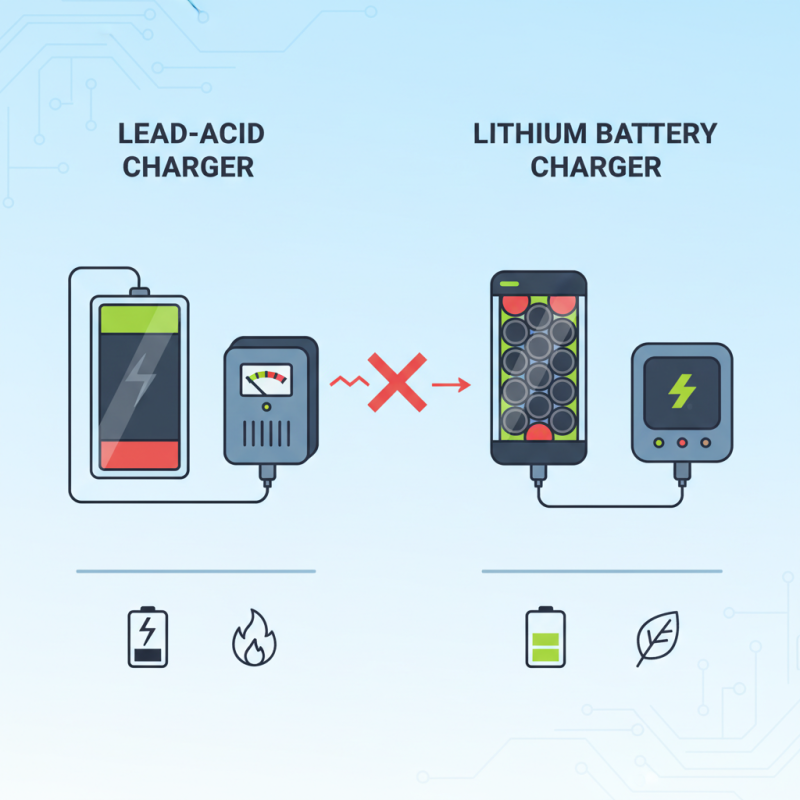
Can I Use a Lead Acid Charger for Lithium Batteries?

Can Lead Acid Chargers Be Used for Lithium Batteries? An Overview

When considering battery charging, many wonder if a lead acid charger can be used for lithium batteries. Unfortunately, the answer is generally no. Lead acid chargers often use different voltage and charging profiles that are incompatible with lithium technology. According to industry reports, lithium batteries require precise charging protocols. Using inappropriate chargers can lead to battery damage or safety hazards.

Lithium batteries have a higher energy density and different charging needs. For example, they typically require a constant current and then switch to a constant voltage phase. If you use a lead acid charger, it may overcharge the lithium battery, risking overheating or fire. Studies suggest that improper charging can shorten battery life by 30-50%.

Tip: Always use chargers specifically designed for lithium batteries. Check compatibility before charging. If unsure, consult a professional. Understanding battery chemistry is crucial. The subtle differences between types of batteries can have significant impacts. Prioritize safety and efficiency in your charging practices.

Differences in Charging Characteristics Between Lead Acid and Lithium Batteries

Charging lithium batteries requires specific attention due to their different chemistry compared to lead acid batteries. Lead acid chargers typically apply a constant voltage, leading to various issues when used on lithium batteries. Lithium batteries prefer a constant current and constant voltage approach. Using the wrong charger can lead to overcharging and potential battery damage.

Lithium batteries have a much higher discharge rate. They can quickly lose charge if not properly managed. When charged, they reach full capacity sooner than lead acid counterparts. This difference can create confusion for users who switch between battery types. It’s crucial to have the right charger for the right battery to avoid mishaps.

Tips: Always check the specifications before charging a battery. Use a charger dedicated to lithium technology to ensure safety and efficiency. Consider investing in a smart charger, which can automatically adjust to the battery's needs.

Can I Use a Lead Acid Charger for Lithium Batteries? - Differences in Charging Characteristics Between Lead Acid and Lithium Batteries

Parameter Lead Acid Batteries Lithium Batteries
Voltage 2.0 - 2.4 V per cell 3.2 - 4.2 V per cell
Charging Method Constant Voltage Constant Current / Constant Voltage (CC-CV)
Recommended Charger Type Lead Acid Charger Dedicated Lithium Charger
Charge Time Slow (up to hours) Fast (1-2 hours)
Depth of Discharge (DoD) 50-70% 80-100%
Lifespan (Cycle Life) 500-800 cycles 2000-5000 cycles
Temperature Sensitivity More tolerant to temperature changes Sensitive to extreme temperatures
Self-Discharge Rate High (20% per month) Low (3-5% per month)

Risks and Consequences of Using Wrong Chargers on Lithium Batteries

Using a lead acid charger on lithium batteries poses significant risks. Lithium batteries operate under different charging protocols. Applying the wrong charger can lead to overheating and possible combustion. Research indicates that lithium batteries require specific voltage and current settings. Using a mismatched charger can result in reduced battery lifespan.

Improper charging may cause lithium-ion cells to become unstable. A notable study shows that using a lead acid charger may damage up to 30% of the battery's capacity. This can drastically shorten its usable life. Moreover, poorly managed charging leads to a phenomenon known as thermal runaway. This condition can create hazardous situations, including fires or explosions.

Lithium iron phosphate (LiFePO4) batteries, for instance, thrive under precise conditions. The recommended charging current typically ranges from 0.5C to 1C. A lead acid charger fails to meet these parameters. Understanding the nuances of battery technology is crucial. Ignoring these details can result in loss of investment and safety hazards. It’s clear that using the correct charger is critical for the integrity of lithium batteries.

Industry Guidelines on Charger Compatibility for Lithium-Ion Technologies

Using a lead acid charger for lithium batteries is not advisable. Lithium-ion technologies require specific charging requirements that differ significantly from lead acid batteries. Understanding these differences is crucial for safety and efficiency.

Charger compatibility is based on voltage, current, and charging profiles. Lithium batteries need chargers that can regulate voltage precisely. Overvoltage can damage the battery or lead to hazards. Lead acid chargers, on the other hand, offer a constant voltage that may not suit lithium cells. It’s important to verify the charger’s specifications before use.

**Tips**: Always read the battery’s user manual. It often includes valuable insights on compatibility. Invest in a dedicated charger for lithium batteries. This decision can prolong the battery life and enhance performance. If you must attempt using a lead acid charger, keep a close watch on charging times and temperatures. Discharging lithium batteries incorrectly can lead to performance issues.

Understanding Battery Management Systems in Lithium Charging Processes

When charging lithium batteries, understanding the battery management system (BMS) is crucial. Lithium batteries require precise voltage and current regulation during the charging process. A BMS monitors these parameters, ensuring that each cell in the battery remains balanced and safe. This is vital because mismatched voltages can lead to cell damage, reducing the battery's lifespan.

Using a lead acid charger on lithium batteries can lead to serious issues. These chargers typically provide a higher voltage than necessary for lithium, risking overheating or failure. A proper BMS can prevent such scenarios by cutting off power during dangerous conditions. Always check your battery specifications before charging.

Tips: Always use a charger designed for lithium batteries. This ensures the BMS can function correctly. Regularly inspect your battery for signs of swelling or damage. Lastly, familiarize yourself with the BMS alerts; they are key indicators of battery health.

FAQS

: What type of charger should I use for lithium batteries?

: Always use a charger specifically designed for lithium technology.

Can I use a lead acid charger on lithium batteries?

No, it's not advisable. Lead acid chargers do not meet lithium requirements.

What happens if I use the wrong charger?

Using the wrong charger can lead to overcharging and battery damage.

How do charging rates differ between battery types?

Lithium batteries charge faster and reach full capacity quickly compared to lead acid batteries.

Why is charger compatibility crucial?

Charger compatibility ensures safety and efficiency in battery performance.

What should I check before charging a battery?

Always verify the specifications and requirements of your battery model.

Why are smart chargers recommended?

Smart chargers can automatically adjust to a battery's needs for optimal charging.

How does overvoltage affect lithium batteries?

Overvoltage can damage lithium batteries and create safety hazards.

What to do if using a lead acid charger?

If you must use it, monitor charging times and battery temperatures closely.

Can improper discharge damage lithium batteries?

Yes, incorrect discharge can lead to significant performance issues.

Conclusion

When considering the question, "Can I use a lead-acid charger for lithium batteries?", it is essential to understand the fundamental differences in charging characteristics between these two battery technologies. Lead-acid chargers are designed for the unique chemistry of lead-acid batteries, which typically requires different voltage and current profiles than those of lithium batteries. Using a lead-acid charger on lithium batteries can lead to improper charging, which poses significant risks such as overheating, reduced battery lifespan, and even safety hazards.

Industry guidelines emphasize the importance of using compatible chargers specifically designed for lithium-ion technologies. These chargers incorporate advanced battery management systems that monitor and adjust the charging process, ensuring optimal performance and safety. Understanding these differences is crucial for anyone looking to maintain their lithium battery systems effectively while avoiding the potential consequences of using the wrong type of charger.

Madeline

Madeline

Madeline is a dedicated marketing professional with a wealth of expertise in our company's core offerings. With a keen understanding of the industry, she brings a unique perspective to her role, consistently delivering high-quality content that highlights the superior aspects of our products. As......