Explore NexBolt's high-efficiency smart charging hardware. These solutions are engineered to support multi-channel charging infrastructures across commercial fleets, industrial equipment, and light electric vehicles.
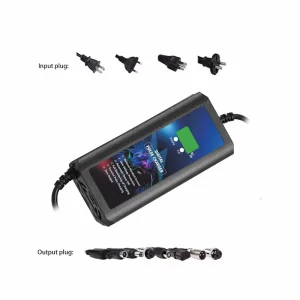
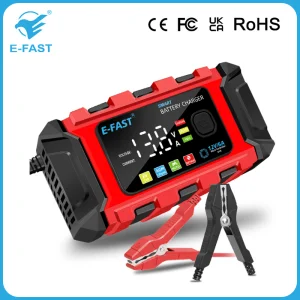
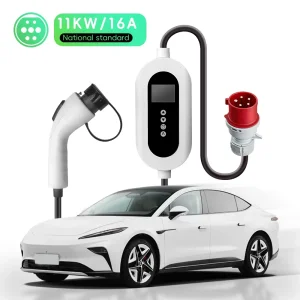
As global commercial and industrial entities execute aggressive carbon-reduction strategies, the electrification of utility fleets, material handling machinery, micro-mobility, and marine vessels is expanding rapidly. Among these infrastructure dynamics, the demand for high-density charging systems, particularly Quad Bank Battery Chargers (4-bank chargers), has surged. These devices allow operators to balance, monitor, and charge four independent batteries or battery packs simultaneously from a single AC input power supply. By scaling down footprint requirements and optimizing input power distribution, industrial operations achieve significant efficiency gains.
The global transition from legacy fossil-fuel vehicles to electric material handling fleets (such as forklifts, automated guided vehicles (AGVs), and ground support equipment) demands charging setups that maximize uptime. A quad-bank architecture eliminates the logistical bottleneck of allocating one physical power source per battery pack. For B2B procurement managers, sourcing these specialized multi-bank systems involves analyzing hardware that can support heterogeneous chemistries—such as Lead-Acid, Lithium-Ion, and Lithium Iron Phosphate (LiFePO4)—while maintaining structural and electrical isolation across all four isolated channels.
Modern multi-bank chargers leverage High-Frequency Switching Mode Power Supply (SMPS) topologies. Unlike old linear transformers, which suffered from high thermal losses, modern SMPS units convert energy using high-speed semiconductor switches (SiC or GaN transistors) at frequencies ranging from 50 kHz to over 200 kHz. This enables smaller magnetic components, lowering the device's weight and footprint while pushing charging efficiency to 99%.
A key differentiator in premium quad bank chargers is the inclusion of dedicated microcontrollers (MCUs) for each bank. Rather than using one controller that splits power evenly, each bank operates as an independent power supply. This design allows for different charging algorithms on each channel. For example, a single NexBolt quad charger can charge a LiFePO4 pack on Bank 1, a standard Lead-Acid battery on Bank 2, a Li-Polymer forklift battery on Bank 3, and a 12V starting battery on Bank 4—each with its own multi-stage curve (Bulk, Absorption, Float/Equalization, and Pulse Maintenance).
| Performance Metric | NexBolt Industrial Multi-Bank | Conventional Multi-Bank Systems | Strategic Advantage |
|---|---|---|---|
| Power Conversion Efficiency | Up to 99% (Low waste heat) | 80% – 85% (High thermal footprint) | Lowers operating costs and reduces component stress. |
| Isolation Between Channels | Fully isolated (>2.5 kV AC isolation) | Common ground (High risk of short circuits) | Prevents cross-talk and ground loop damage. |
| Housing & Protection | Extruded Aluminum Alloy (IP67 Option) | Stamped Sheet Steel (IP20 Open Vent) | Corrosion resistance in demanding industrial environments. |
| Communication Support | CAN-bus / RS485 Interface integration | Analog interface / None | Seamless integration with modern Battery Management Systems (BMS). |
The global supply chain for battery charging systems depends heavily on advanced industrial clusters. Located in Huizhou, Guangdong, Huizhou NexBolt Charger Co., Ltd. represents the efficiency and quality control found in modern Chinese electronics manufacturing. Established in 2009, NexBolt integrates R&D, component sourcing, automated surface-mount technology (SMT) assembly, and testing lines under one system.
Chinese manufacturing hubs benefit from local component ecosystems. Everything from high-frequency transformers to custom extruded aluminum enclosures is sourced nearby, keeping lead times short. NexBolt leverages this infrastructure to design and deliver custom OEM/ODM solutions at scale. This integration enables NexBolt to offer competitive pricing, run rigorous environmental tests, and secure certifications like CE, RoHS, UL, FCC, SAA, and PSE for global markets.
Quad bank battery chargers are versatile, high-efficiency systems deployed across demanding industrial and commercial applications globally.
In modern automated warehouses, automated guided vehicles (AGVs) and electric walkie-stackers run on tight schedules. Using quad bank chargers at central stations allows fleet managers to charge up to four spare battery packs at once, keeping down-time minimal.
Saltwater and moisture can damage electronic components. By using an IP67 waterproof quad bank charger, commercial vessels and charter docks can charge onboard auxiliary, starting, and trolling motor batteries safely without risk of corrosion.
Golf cart complexes manage large numbers of utility vehicles. Consolidating charging infrastructure with multi-channel systems helps operators reduce cable clutter, optimize power distribution, and simplify maintenance checks.
B2B procurement professionals must look beyond unit prices when sourcing quad bank chargers. Total Cost of Ownership (TCO) includes operational efficiency, reliability, safety compliance, and potential downtime. A charger with low conversion efficiency will consume more electricity and generate excess heat, requiring extra ventilation and shortening battery service life.
Compliance and certification are critical for global supply chains. Sourcing managers must verify that supplier components comply with local electrical codes. High-performance industrial chargers need clear certifications, including CE, RoHS, UL, FCC, SAA, and PSE. Buying uncertified hardware can lead to import delays, liability risks, and unsafe operating conditions on the factory floor.
NexBolt design engineers customize charging profiles via CAN-bus communication protocols, allowing our charging systems to interface with various smart Battery Management Systems (BMS). This connectivity allows chargers to dynamically adjust voltage and current based on cell status, temperature, and cycle history. Integrating these smart features helps prevent battery degradation and optimizes fleet operations.
Huizhou NexBolt Charger Co., Ltd. works closely with OEM and ODM clients worldwide, providing custom wire harness designs, tailored firmware configurations, and custom product casings. This flexible design approach ensures that NexBolt chargers integrate smoothly into existing fleet operations, marine systems, and industrial machinery.
Get quick answers to common technical, manufacturing, and shipping questions about industrial multi-bank chargers.
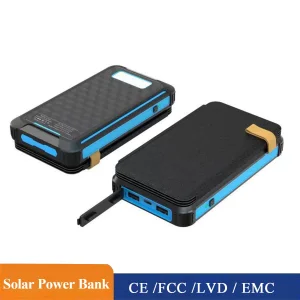
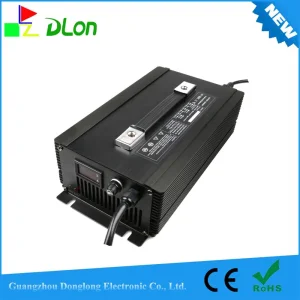
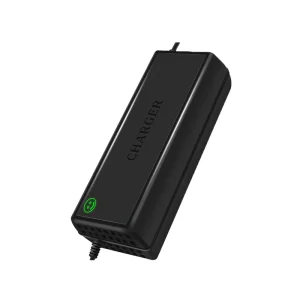
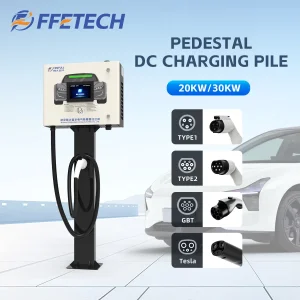
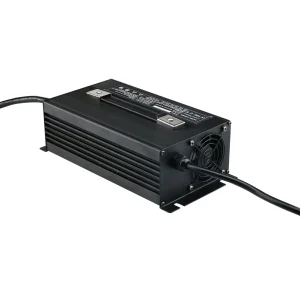
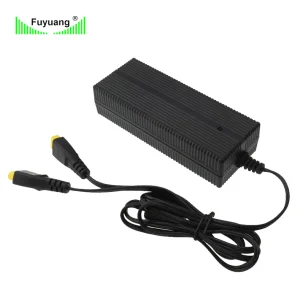
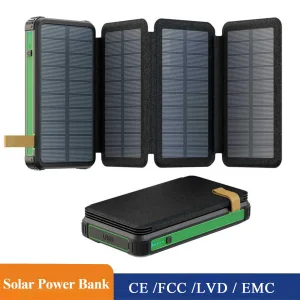
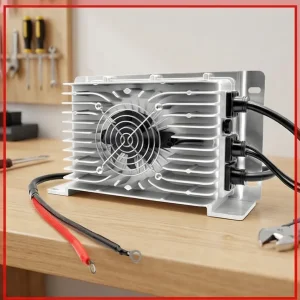
Explore additional industrial chargers, power banks, and on-board units from NexBolt, designed to deliver high reliability and steady performance in demanding operating environments.
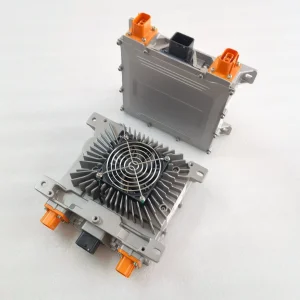
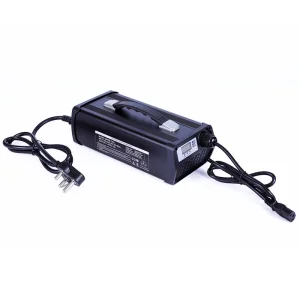
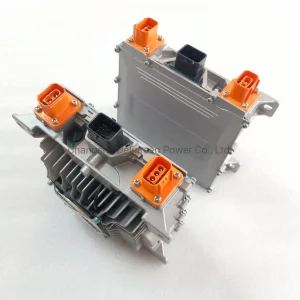
Established in 2009, Huizhou NexBolt Charger Co., Ltd. is a specialized manufacturer focused on the research, development, and production of advanced lithium and lead-acid battery charging solutions. Our products are used globally in electric vehicles (EVs), material handling equipment, electric motorcycles, golf carts, AGVs, and industrial energy storage systems.
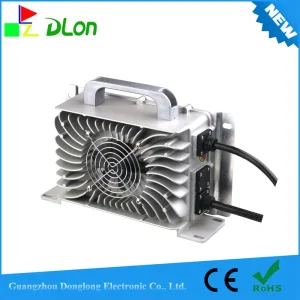
By utilizing high-frequency switching power supply technology, NexBolt chargers achieve conversion efficiencies up to 99%. Our designs feature durable, lightweight aluminum housings for reliable passive heat dissipation, making them suitable for demanding industrial environments. All products comply with international standards and hold certifications including CE, RoHS, FCC, UL, and PSE.
NexBolt operates R&D and production facilities in Huizhou, serving clients across North America, Europe, and Southeast Asia. We support global electrification by providing robust hardware, custom OEM/ODM services, and reliable technical support.
 NexBolt Charger