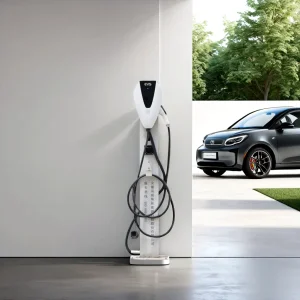
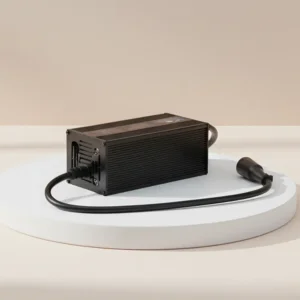
Explore our cutting-edge high-frequency charging platforms, integrated OBC power modules, and specialized desulfating chargers configured for heavy-duty applications.
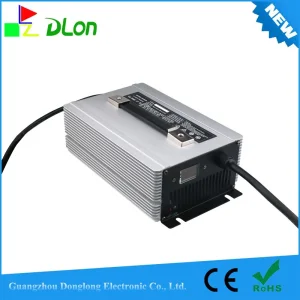
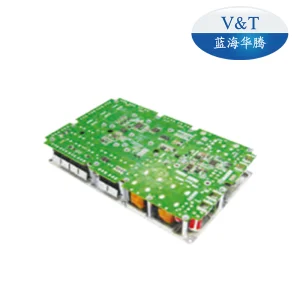
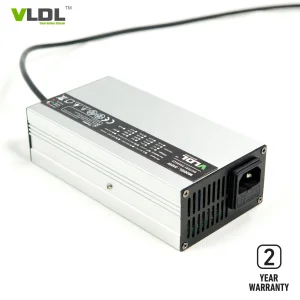
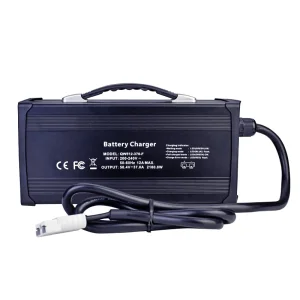
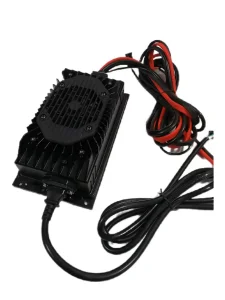
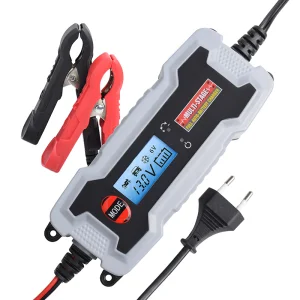
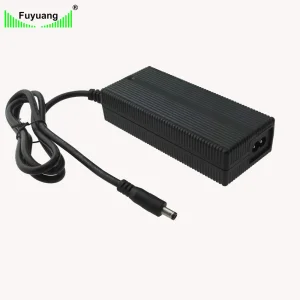
Our commitment to cutting-edge power electronics and advanced pulse desulfation algorithms drives real-world energy and capital savings for global enterprises.
Lead-acid batteries are the workhorses of global logistics, telecommunications backup networks, and heavy industries. However, they suffer from an inherent chemical vulnerability: sulfation. During discharge, lead plates interact with the sulfuric acid electrolyte to form lead sulfate crystals ($PbSO_4$). While this is a reversible process under normal charging conditions, prolonged storage in a discharged state, chronic undercharging, or frequent high-temperature operations cause these amorphous crystals to harden and consolidate.
This hardened crystalline structures coat the active plate surfaces, acting as an electrical insulator and progressively choking off chemical reaction pathways. The consequence is a rapid decline in battery capacity, surging internal resistance, overheating during charge cycles, and eventually, premature battery failure.
Industrial Insight: Over 75% of heavy-duty industrial lead-acid batteries are scrapped prematurely not due to structural damage, but because of severe crystallization that conventional chargers cannot dissolve.
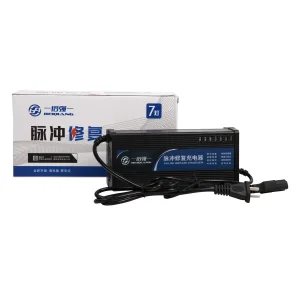
Huizhou NexBolt's proprietary high-frequency pulse desulfation technology addresses this root cause. By feeding controlled, high-frequency resonance pulses through the plates, the charger selectively targets the crystalline matrix, safely dissolving hardened lead sulfate back into active ions. This restores electrolyte specific gravity, decreases internal resistance, and expands the functional capacity back to near-nominal levels.
| Feature/Metric | Standard Industrial Charger | NexBolt Smart Pulse Desulfator |
|---|---|---|
| Charging Efficiency | 75% - 85% | Up to 99% (High-Frequency Switching) |
| Crystalline Recovery | None (Passive Charging) | Active High-Frequency Pulse Dissolution |
| Thermal Runaway Protection | Basic Temperature Shut-off | Intelligent Dynamic Duty-Cycle Tuning |
| Power Factor Correction (PFC) | Optional / Low Efficiency | Active PFC Integrated (>0.98) |
| Supported Chemistries | Lead-Acid only | Multi-Chemistry (Gel, AGM, LiFePO4, Li-ion) |
We work directly with product development teams, fleet directors, and system integrators to configure charging solutions optimized for demanding applications.
We program intelligent duty-cycles that resonate with lead sulfate crystals, optimizing dissolution rates while protecting internal grids from plate shedding.
Proprietary MCU-controlled algorithms automatically transition between desulfation, bulk charging, absorption, and floating maintenance stages.
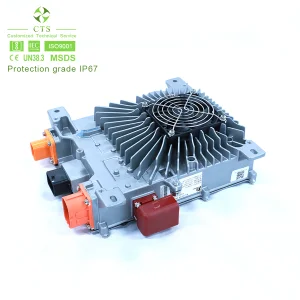
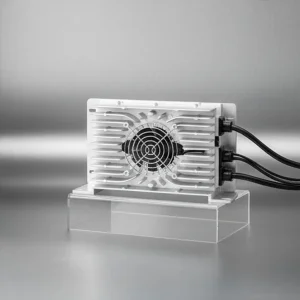
Cast aluminum housings provide IP65/IP67 ingress protection and efficient convection cooling, handling extreme shocks, dust, and corrosive environments.
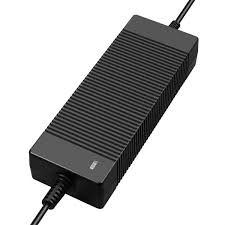
Different industries require highly specialized charging solutions. Standard off-the-shelf equipment fails to address unique duty-cycle loads, environment stressors, and space footprints. Here are the core sectors leveraging NexBolt technology:
Operating out of Huizhou, the epicentre of China's advanced power electronics industry, NexBolt Charger Co., Ltd. delivers distinct supply chain, manufacturing, and R&D advantages that benefit our global clients:
1. Integrated Supply Chain Ecosystem: By source-managing electronic sub-assemblies, semiconductors, raw copper, and aluminum casings within a 50-kilometer radius, we eliminate international logistic delays, streamline material procurement, and stabilize manufacturing costs.
2. Advanced Automated Assembly lines: Utilizing automated surface mount technology (SMT) for circuit board layouts and robotic wave-soldering lines ensures consistent quality across large-batch OEM production runs, reducing defects to under 0.05%.
3. Rigorous Quality Validation: Every single battery charger and desulfator undergoes extensive environmental chambers testing, vibration tests, high-voltage insulation tests, and full-load burn-in testing prior to export.
4. Rapid Prototyping and Customization: Our in-house engineering team translates customized electrical requirements (voltage limits, CAN-bus integration, specialized pulse patterns) into working prototypes within 10 to 15 business days.
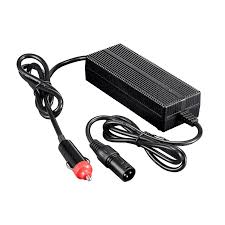
Established in 2009, Huizhou NexBolt Charger Co., Ltd. is a premier manufacturer specializing in the research, development, production, and sales of advanced lithium and lead-acid battery charging solutions. Our comprehensive portfolio is engineered for electric vehicles (EVs), electric motorcycles, e-bikes, electric sweepers, forklifts, AGVs, and complex industrial energy storage systems, meeting the strict standards of modern electrification.
By leveraging high-frequency switching power supply technology, NexBolt chargers achieve outstanding conversion efficiency (up to 99%), stable output profiles, smart charging controls, and robust safety protocols. Our products feature integrated multi-layered safety mechanisms—including over-voltage, over-current, short-circuit, and over-temperature protections—to ensure stable operation under the most taxing industrial parameters. Encased in high-grade aluminum alloy housings, our chargers offer exceptional heat dissipation, long-term durability, structural integrity, and lightweight form factors for effortless integration.
Quality and continuous innovation form the core of our business operations. All NexBolt products are fully compliant with international benchmarks and hold certified marks including CE and RoHS. We own multiple national patents for independently developed charging technologies, proving our robust R&D depth. Our engineers continually push to optimize conversion efficiency, lower standby consumption, and design tailored client modifications.
Over the years, we have scaled our footprint across North America, Europe, Southeast Asia, and beyond, establishing long-term, stable relationships with leading e-bike manufacturers, heavy industrial forklift builders, and global OEM/ODM distributors. Through persistent capital investment in manufacturing automation, testing gear, and technical training, NexBolt remains a trusted partner in the global transition to green energy and industrial efficiency.
As logistics and material handling networks expand, the technologies powering them are undergoing a rapid paradigm shift.
Future desulfating chargers will utilize real-time impedance sensing to modulate pulse frequencies, adapting specifically to the state of crystallization inside each individual cell.
Integrating Gallium Nitride (GaN) components allows NexBolt to construct smaller, lighter, and more heat-efficient high-frequency chargers that boast unmatched power densities.
Integrating Bluetooth, Wi-Fi, and CAN-bus telemetry directly into on-board charging systems enables fleet managers to track battery degradation profiles and schedule cycles remotely.
Get professional, engineering-focused answers to common inquiries regarding desulfation technology, customization, and orders.
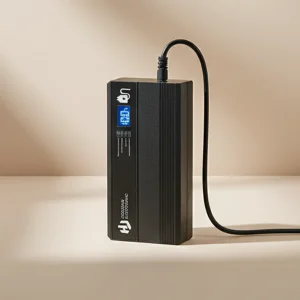
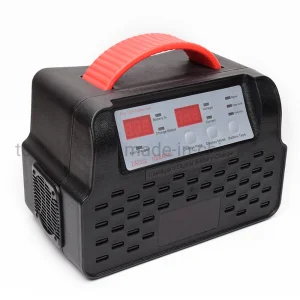
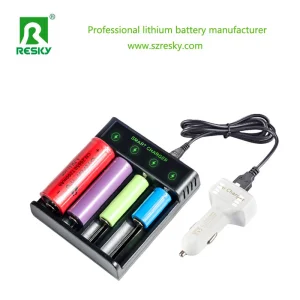
Complete your fleet optimization with our full product selection. These high-voltage, intelligent on-board and portable models are trusted worldwide.
 NexBolt Charger