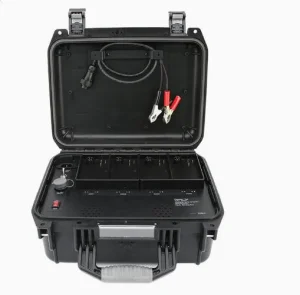
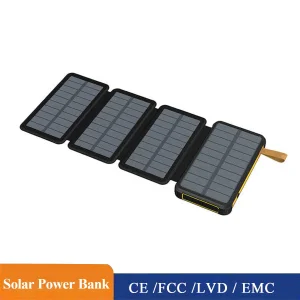
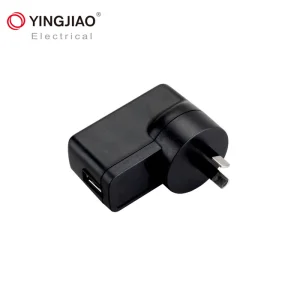
Explore our leading commercial high-performance chargers, designed with intelligent algorithms and engineered for diverse global industrial standards.
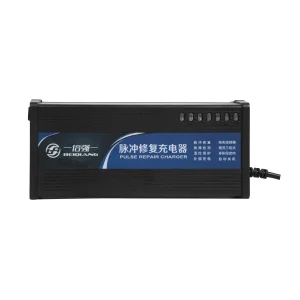
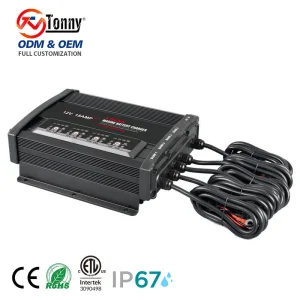
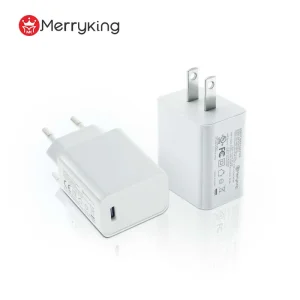
Established in 2009, Huizhou NexBolt Charger Co., Ltd. is a leading pioneer in the research, development, and high-volume manufacture of advanced motive power and industrial battery charging systems. Our specialized product ranges cater extensively to electric vehicles (EVs), electric motorcycles, e-bikes, industrial forklifts, Automated Guided Vehicles (AGVs), sweepers, and large-scale stationary energy storage systems.
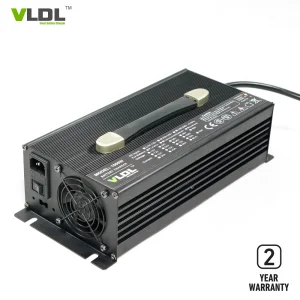
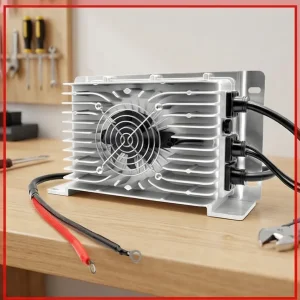
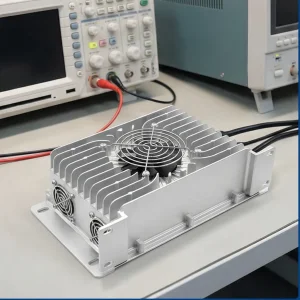
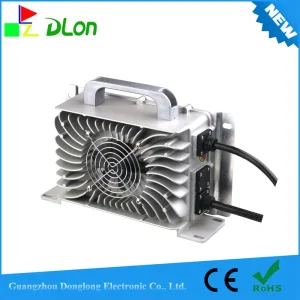
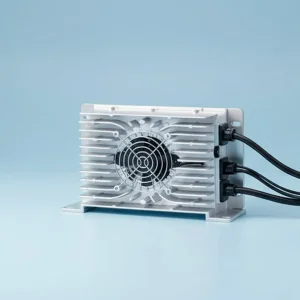
By implementing cutting-edge high-frequency switching power supply topologies (including LLC resonant converters and active PFC), NexBolt power supplies achieve unmatched performance benchmarks. Our systems register up to 99% operational efficiency, maintaining flat conversion curves even under full-load thermal stress. Housed in marine-grade extruded aluminum alloy casing, NexBolt chargers integrate superior passive cooling properties alongside complete IP-rated ingress protection (ranging up to IP67 for extreme marine and mining conditions).
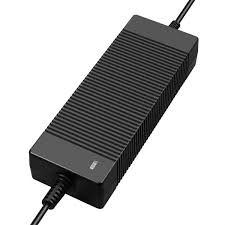
In modern industrial logistics, telecommunication backups, and light electric mobility operations, the battery system forms the core of operating expenditure (OPEX). While battery chemistry selection is critical, the system’s longevity, utility, and safety are dictated almost entirely by the charging cycle profile. As an authority in global power exports, NexBolt dissects the critical variables shaping high-efficiency industrial charging infrastructures.
The global transition towards industrial automation, emission-free logistics, and smart grid distribution demands highly intelligent power delivery modules. Legacy linear chargers—characterized by high energy dissipation, massive iron cores, and poor power factor metrics—are rapidly being phased out. Today's commercial infrastructure utilizes high-frequency switching technology to dramatically lower carbon footprints and utility costs.
Industrial lead-acid charging operates under rigid constraints. Unlike lithium chemistries, lead-acid systems are highly prone to sulfation if left undercharged, and risk active plate shedding and thermal runaway under excessive voltage levels. NexBolt’s high-frequency charging systems address these macro-challenges by executing multi-stage charging algorithms, dynamically tuning the transition thresholds between Constant Current (CC), Constant Voltage (CV), and Float charging phases.
"Thermal runaway and premature plate sulfation account for over 72% of premature industrial lead-acid battery replacements. Intelligent temperature-compensated charging is no longer an optional upgrade; it is an operational mandate."
At the center of NexBolt’s engineering breakthrough is the utilization of soft-switching LLC resonant converters paired with active Power Factor Correction (PFC) circuitry. Our switching frequency reaches upwards of 100 kHz, allowing for a substantial reduction in the physical dimensions of magnetic components, resulting in compact, high-power-density chargers.
The integration of Active PFC (>0.99 power factor at rated load) ensures that current drawn from the local utility grid is perfectly sinusoidal. This minimizes reactive power penalties, avoids localized harmonic distortions in industrial facilities, and reduces cable sizing specifications for building managers. Our LLC resonant technology enables Zero Voltage Switching (ZVS), which dramatically cuts switching losses and permits conversion efficiencies up to 99%, keeping thermal generation inside the charger cabinet to a bare minimum.
Industrial applications present diverse electrical demands. In forklift fleet management, fast charging or opportunity charging is crucial to eliminate the need for battery rotation. However, fast charging lead-acid cells requires precise current regulation to prevent boiling the electrolyte.
Conversely, in stationary applications such as telecommunication cell tower backups and uninterruptible power supplies (UPS), chargers must act as continuous power units, delivering ultra-low ripple voltage to avoid generating parasitic heat within the battery plates. NexBolt designs custom chargers that accommodate both dynamics. Our dual-mode systems allow fleet managers to toggle between quick charge cycles and equalization desulfation runs, securing operational readiness and extending battery life cycles by up to 35%.
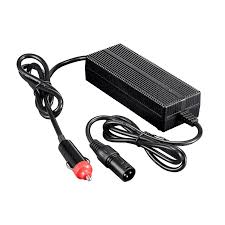
Navigating global grid specifications requires hardware capable of accepting wide input ranges. NexBolt supplies universal AC chargers (from 85V up to 265VAC, 50/60Hz) configured to operate seamlessly across unstable grids. In countries throughout North America, Europe, and Southeast Asia, our chargers automatically compensate for grid sags and spikes without interrupting the charge cycle.
Compliance is paramount. All NexBolt products are built to pass strict electromagnetic compatibility (EMC) regulations, boasting certifications including CE, RoHS, UL, FCC, SAA, KC, and PSE. Each device incorporates a multi-layer safety matrix:
The next decade of industrial battery charging will be defined by connectivity and semiconductor breakthroughs. NexBolt is actively integrating Gallium Nitride (GaN) and Silicon Carbide (SiC) switches into our future platforms to push switching speeds beyond 300 kHz, further shrinking hardware footprint while retaining high output capacities.
Furthermore, the integration of IoT connectivity via CAN-bus, RS485, and Bluetooth protocols is standardizing smart energy management. This allows remote diagnostic tracking, predictive maintenance planning, and real-time charging curve adjustments based on aging profiles and chemical impedance indicators. Fleet operators can visualize state-of-health (SoH) diagnostics remotely, minimizing manual servicing overheads.
NexBolt chargers are engineered with rigorous industrial parameters:
Designed for maximum uptime, electrical efficiency, and long-term durability in hazardous industrial settings.
Integrated microcontrollers execute precise multi-stage profiles (IUoU/equalization) dynamically adjusted to ambient temperatures to optimize battery health.
Extruded aluminum enclosures optimize air convection or heat conduction without needing noisy fans, maintaining integrity in dust-heavy warehouse airflows.
Designed with input wide-range capabilities and compliant with CE, UL, FCC, SAA, KC, and PSE standards to ensure quick grid validation globally.
Engineered for high current delivery, IP67 waterproof standards, and hybrid motive power applications.
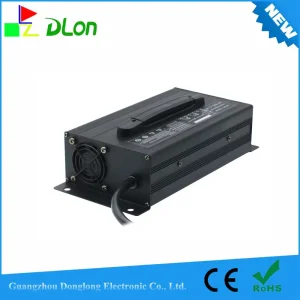
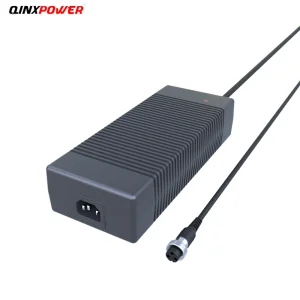
Answers to technical specifications, wholesale ordering, customization parameters, and deployment practices.
 NexBolt Charger