High Power DC Battery Charger Manufacturers & Exporters serving Vanuatu

Providing Marine-Grade, Smart-Grid Grid-Tied and Decentralized Heavy-Duty Industrial Energy Solutions Designed for the Remote Island Infrastructures of the South Pacific

Send Inquiry Now

The Vanuatu Energy Transition: Overcoming Remote Power Limitations

Vanuatu, an archipelago consisting of 83 volcanic islands spanning the South Pacific, faces a highly unique energy paradigm. The nation’s commercial and industrial activities—focused in hubs like Port Vila (Efate) and Luganville (Espiritu Santo)—historically relied on expensive, imported diesel fuel generators. Under the ambitious Vanuatu National Energy Road Map (NERM), the government has set a target of transitioning to nearly 100% renewable energy by 2030, utilizing solar photovoltaic systems, biomass, hydro-power, and wind energy.

However, integrating decentralized renewable energy sources into weak, localized grids presents significant technical hurdles. Fluctuations in supply can cause severe voltage sags and surges, threatening sensitive electrical infrastructure. This is where High-Power DC Battery Chargers act as critical nodes. By serving as the interface between renewable generation facilities, energy storage systems (ESS), and heavy transportation/utility equipment, these chargers ensure smooth, rectifying power transfer and grid stabilization.

In addition, Vanuatu’s tropical climate presents extreme operational challenges. The combination of intense atmospheric salinity (marine salt spray), relative humidity consistently exceeding 80%, and frequent seismic/cyclonic activity demands industrial power modules that are not merely "off-the-shelf" units, but instead hermetically sealed, anti-corrosion, vibration-resistant power electronics.
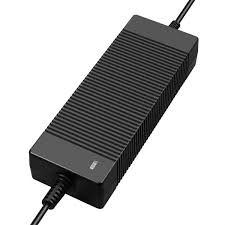
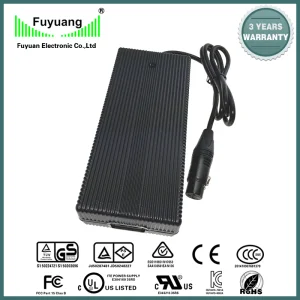
99%
Peak Efficiency
IP65
Marine Standard
15+ Yr
Design Life
<3%
Total Harmonic Dist
Huizhou NexBolt Charger Co., Ltd. Advanced R&D and Quality Control Center

Engineering for Resilience: NexBolt Industrial DC Charging Topology

As an established innovator in high-power charging technologies, Huizhou NexBolt Charger Co., Ltd. has spent over 15 years developing high-frequency switching power supply systems specifically engineered for unstable electrical microgrids and harsh marine environments. Our technical roadmap integrates state-of-the-art power conversion techniques to solve the specific paint points of South Pacific operators.

Active Power Factor Correction (APFC) & LLC Resonant Converters

NexBolt chargers utilize advanced APFC topologies to achieve a power factor greater than 0.99, reducing harmonic distortion to less than 3%. This prevents damage to localized utility transformers and diesel backup generators in Vanuatu's off-grid stations.

🛡️

Galvanic Isolation & Multi-Stage Safety Shutdowns

Complete input-to-output high-frequency transformer isolation protects auxiliary battery banks from line-side lightning surges and grid instability. Features include over-voltage, over-current, and smart thermal throttlebacks.

🌊

Anodized Aluminum Alloy & Triple-Prevention Coating

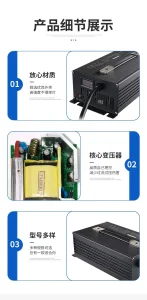
Constructed with durable aluminum alloy housings, our cabinets offer rapid thermal dissipation without relying on salt-prone forced-air intake. Internal PCBs are coated with polyurethane resin to resist tropical humidity and salt corrosion.

🔋

Multi-Chemistry Intelligent Charging Profiles

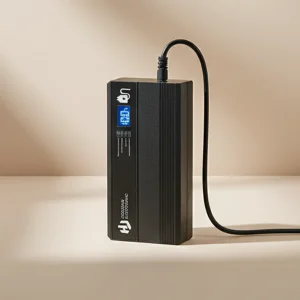
Whether charging LiFePO4, traditional Lead-Acid, or LTO chemistries, NexBolt's proprietary MCU-controlled algorithms automatically adjust current and voltage curves, prolonging cell life by up to 30%.

Macro Industry Solutions: Bridging Energy Generation & Storage

Modern commercial operations in Vanuatu—such as the international ports in Port Vila, municipal fleets, and regional telecommunications towers—require uninterrupted power. Standard power supplies suffer catastrophic failure rates under localized stress. By implementing NexBolt’s modular charging solutions, industrial plants achieve stable DC power supply cabinets, ensuring that critical operations, municipal SCADA systems, and backup battery banks remain online regardless of grid load.

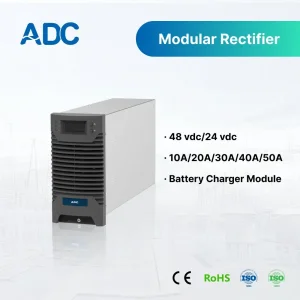
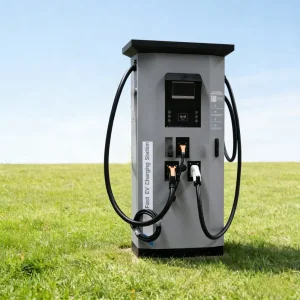
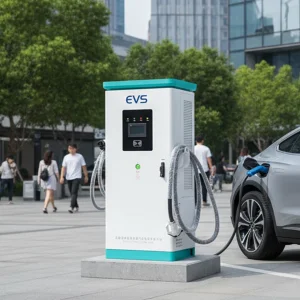
Technical Parameters Industrial DC Battery Charger Modules EV DC Fast Charging Stations (Split/Integrated)
Input Voltage Range 180VAC - 264VAC (Single Phase) / 340VAC - 460VAC (Three Phase) 380VAC / 400VAC / 480VAC (±15%, 3-Phase + PE)
Output DC Voltage Range 24VDC, 42VDC, 60VDC, 73VDC, 87.6VDC, up to 100VDC Max 150VDC - 1000VDC (Wide Voltage Auto-Range)
Power Factor (PF) / THD ≥ 0.99 / < 5% at rated output load ≥ 0.99 / < 3% at full rating output load
Conversion Efficiency 94% - 97% (Nominal load conditions) Up to 99% peak with high-frequency SiC modules
Protection Class IP54 / IP65 (Hermetically sealed options) IP55 / IP65 (Standard dustproof and rainproof)
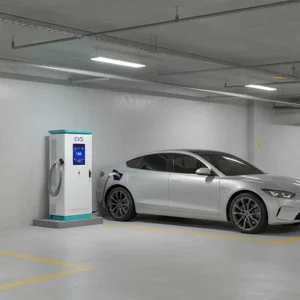
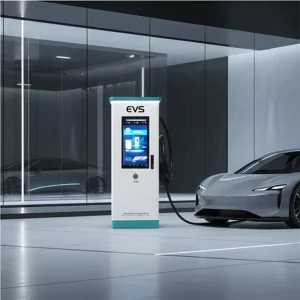
Communications RS485, CAN-Bus 2.0B (Isolated) OCPP 1.6J / OCPP 2.0.1, Ethernet, 4G, Wi-Fi
Cooling Technology Natural convection / Intelligent temperature-controlled fan Liquid cooled (ultra-high power) / Smart air duct cooling

Targeted Applications Across Vanuatu's Commercial Sectors

To unlock the economic benefits of energy independence, Vanuatu requires customized energy assets. High-power DC battery chargers are deployed across five primary sectors:

  1. Decentralized Solar Microgrid Integration: Providing remote villages and eco-resorts on outer islands like Tanna, Santo, and Malekula with stable DC charging terminals that convert intermittent solar energy into stored battery energy.
  2. Maritime and Eco-Tourism Transport Electrification: Outfitting tourist shuttle buses and coastal passenger boats with high-power rapid DC charging modules, drastically reducing fuel overheads for hospitality operators.
  3. Telecommunications Network Security: Ensuring localized transceivers and telecom repeaters (crucial during natural disasters) maintain persistent uptime through ultra-reliable 24V and 48V backup DC charging systems.
  4. Port Operations & AGV/Forklift Infrastructure: Equipping the shipping ports in Luganville and Port Vila with heavy-duty rapid chargers for forklifts, towing equipment, and automated guided vehicles (AGVs).
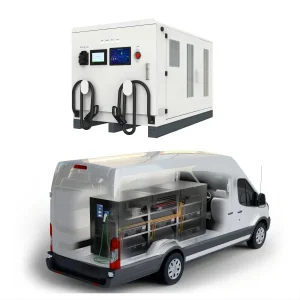
  5. Mobile Disaster Relief & Road Rescue: Deploying the NexBolt Mobile 120kW DC Charger with integrated 122kWh battery storage. This unit acts as a portable substation, ensuring emergency electric vehicle rescue and backup grid power during cyclone recovery efforts.
Huizhou NexBolt Charger Co., Ltd. Manufacturing Facility & Global Logistics Hub

About Huizhou NexBolt Charger Co., Ltd.

Established in 2009, Huizhou NexBolt Charger Co., Ltd. is a leading global manufacturer specializing in the research, development, production, and sales of advanced lithium battery charging solutions. Our engineering solutions are deployed worldwide, powering electric vehicles (EVs), industrial AGVs, electric sweepers, marine transportation vessels, forklifts, and large-scale commercial energy storage systems.

Quality control is central to our design philosophy. Operating out of our ISO 9001:2015-certified production facilities, we apply rigorous testing routines, including simulated high-salinity salt spray chambers, thermal cycling chambers, and vibration tests, to ensure every charger is ready for the harsh environmental challenges of South Pacific operations. Our systems hold internationally recognized safety certifications, including CE, RoHS, and FCC.

With extensive export experience shipping to regions throughout Europe, North America, Southeast Asia, and Oceania, NexBolt provides seamless end-to-end logistics solutions, comprehensive technical onboarding, custom OEM/ODM packaging, and dedicated after-sales support to keep your operations powered.

Technical Frequently Asked Questions
Detailed engineering and deployment questions concerning industrial DC chargers in tropical island grids.
How do NexBolt chargers prevent failure in high-salinity marine environments? +
Our systems utilize anodized aluminum housings, which prevent structural degradation from salt spray. Additionally, the internal PCBs undergo triple conformal coating processes (protecting against moisture, salt spray, and dust build-up) and are engineered to minimize air intake requirements. This significantly reduces internal exposure to airborne contaminants.
Can these chargers handle voltage fluctuations common to Vanuatu's electrical grid? +
Yes. NexBolt chargers feature wide input voltage windows (e.g., 340VAC - 460VAC for 3-phase systems) and integrate high-response active power filters. When the input voltage dips or surges, our integrated microcontrollers throttle output to protect both the charger's internal circuits and the connected battery bank.
Are your EV fast chargers compatible with the different plug standards used in imported vehicles? +
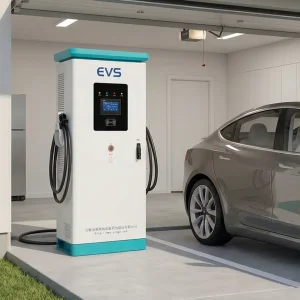
Absolutely. We offer customizable dual-standard fast-charging terminals (e.g., CCS2/CHAdeMO or CCS1/CCS2/GBT configurations). This flexibility is critical in Vanuatu, where commercial vehicle imports arrive from various regions, including Australia, New Zealand, Japan, and China.
What communications protocols do the EV chargers support for remote fleet management? +
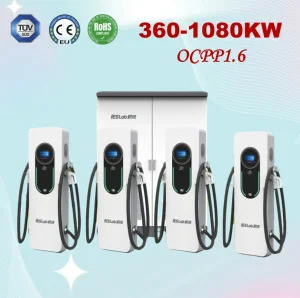
Our fast-charging stations are fully compliant with OCPP (Open Charge Point Protocol) 1.6J and 2.0.1. This enables local operators in Port Vila or Luganville to remotely manage charging queues, monitor electrical metrics, and track billing details via cellular (4G), Wi-Fi, or Ethernet links.
What safety protocols are integrated into the high-power LiFePO4 battery charger modules? +
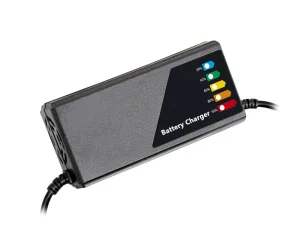
Our chargers utilize a multi-stage safety framework including auto-current correction, thermal protection, reverse-polarity prevention, output short-circuit protection, and battery management system (BMS) communications via CAN-Bus or RS485. If a cell temperature spike or battery voltage error is detected, the charger will automatically pause energy flow.

Power Your Infrastructure with NexBolt Technology

Contact our application engineering team today to receive a detailed quote, schedule a technical consultation, or discuss custom power parameters tailored to your regional operations in Vanuatu.

Send Inquiry Now