China Best Scissor Lift Battery Charger Exporter & Exporters

Next-Generation Smart Electrification & Heavy-Duty Power Management Solutions for Industrial Fleets and Aerial Work Platforms (AWP)

Whitepaper Abstract: Electrification in Aerial Work Platforms (AWP)

The global shift toward electrification within construction, warehousing, and municipal works has catalyzed a massive demand for robust, highly efficient charging topologies. Scissor lifts represent the workhorse of vertical industrial access. However, their productivity is fundamentally gated by the performance, longevity, and reliability of their on-board charging systems.

As a leading pioneer, Huizhou NexBolt Charger Co., Ltd. (established in 2009) has engineered cutting-edge solutions specifically addressing the harsh physical environments and electrical stresses inherent to aerial lift applications. By transitioning from antiquated low-frequency linear designs to dynamic, microprocessor-controlled high-frequency switching power supply systems, NexBolt has achieved a new benchmark in thermal efficiency (up to 99%) and structural toughness.

This document outlines the macroeconomic procurement demands, structural engineering solutions, international safety compliance standards, and digital communication integration that global fleet buyers must prioritize when selecting a scissor lift battery charger partner.
Huizhou NexBolt Charger Factory and R&D Base

Understanding Global Corporate Procurement Demands

Industrial fleet operators, heavy machinery distributors, and rental agencies operate under thin margin structures where vehicle downtime directly impacts EBITDA. Through comprehensive user intent mining and industry inquiries, we identify four critical requirements driving corporate procurement teams:

99%
Charging Efficiency
IP67
Ingress Protection
<4Hr
Average Fast Charge
15Yr+
Engineering Legacy
  • Total Cost of Ownership (TCO) Reduction: Chargers that fail prematurely on the construction site require costly field technician dispatch and equipment swaps. Procurement officers demand chargers with MTBF (Mean Time Between Failures) metrics exceeding 50,000 operational hours.
  • Multi-Chemistry Charge Profiles: As fleets transition from traditional flooded lead-acid (FLA) to Lithium Iron Phosphate (LiFePO4/LFP), chargers must support multiple charging profiles natively. An adaptable charger minimizes inventory overhead and prevents mismatched-chemistry accidents.
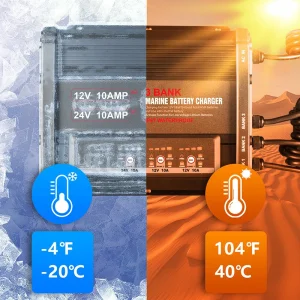
  • Extreme Climate Resilience: Scissor lifts are frequently left outdoors in sub-zero winter temperatures or exposed to direct tropical sunlight. Charging hardware must dynamically adjust voltage limits based on real-time ambient and battery temperature feedback.
  • Strict Compliance Alignment: Global supply chains require hardware that crosses borders without regulatory resistance. A universal footprint with CE, RoHS, UL, FCC, SAA, and KC certifications ensures effortless customs clearance and legal compliance.

Key Technical Parameters of NexBolt Scissor Lift Charger Systems

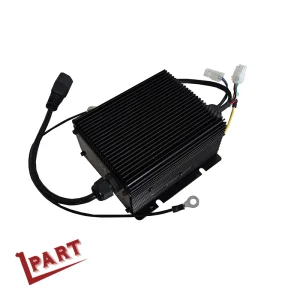
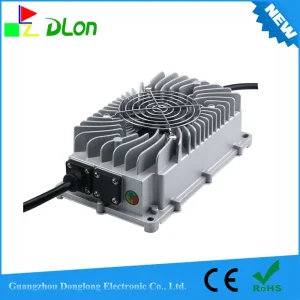
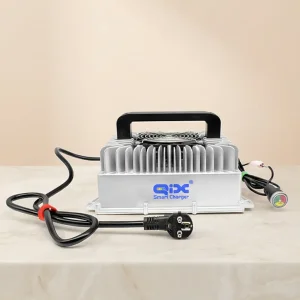
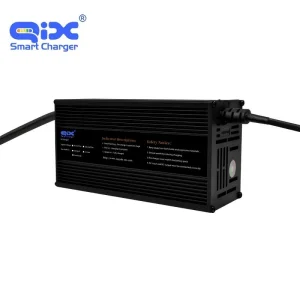
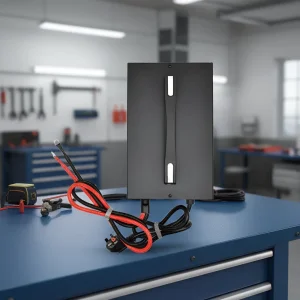
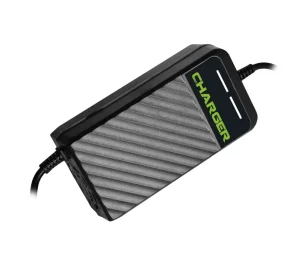
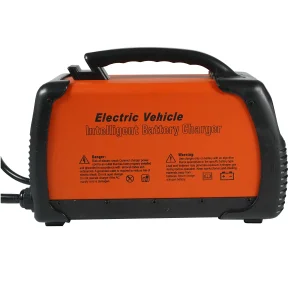
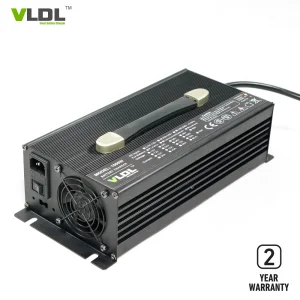
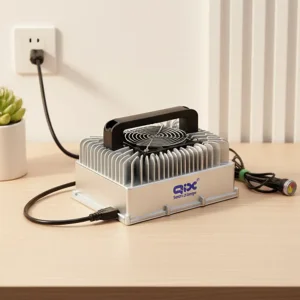
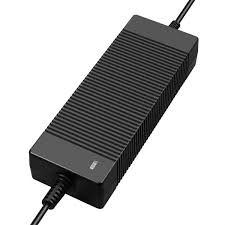
Designed using top-grade extruded aluminum alloy housings, NexBolt chargers integrate advanced protection circuits: Over-Voltage, Over-Current, Short-Circuit, and Over-Temperature controls. High-frequency conversion processes minimize core losses, maximizing energy output while minimizing thermal radiation. The lightweight and compact dimensions make them ideal for space-constrained chassis compartments on modern AWPs.

Macro Industry Solutions: Multi-Platform Compatibility

Modern distribution centers, industrial shipyards, and smart manufacturing facilities operate mixed fleets of access platforms. To streamline workflow, NexBolt implements multi-stage charging algorithms that adapt to forklift batteries, golf carts, utility vehicles, and scissor lifts.

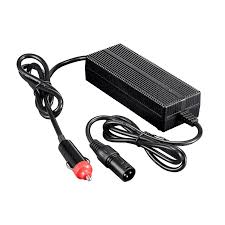
For instance, our premium 3300W IP67 Waterproof Charger acts as a centralized macro solution. Utilizing dynamic software parameters, it can be programmed to charge 12V, 24V, 36V, 48V, or 72V configurations. By controlling the constant-current (CC) and constant-voltage (CV) limits, the internal microprocessor actively prevents desulfation in lead batteries and prevents overcharging in high-density LiFePO4 chemistry.

Additionally, NexBolt's high-frequency switching technology delivers power-factor-correction (PFC) values greater than 0.98. This optimizes utility power consumption, reducing peak demand surcharges for large warehouses running dozens of chargers simultaneously.

Technology Roadmap: Next-Gen Charging Innovations

The future of industrial power management lies in interconnected intelligence. NexBolt’s engineering team is developing and integrating smart IoT features, advanced diagnostic communication, and robust protection systems:

  • CAN Bus 2.0B Integration: Continuous real-time communication between the charger and the battery management system (BMS) allows precise monitoring of cell voltages, balancing status, and internal temperature profiles.
  • Predictive Wear Analysis: Micro-oscillations in charge cycle resistance are recorded to predict battery health deterioration before a field failure occurs, enabling preventative fleet maintenance.
  • IP67 Fully Sealed Potted Topology: Eliminating internal fans by filling the aluminum enclosure with thermal-conductive epoxy. This protects delicate electronics from metal dust, vibration, moisture, and corrosive atmospheric pollutants.
  • Green Energy Hybrid Inlets: Direct DC-to-DC charging interface capabilities to hook directly into off-grid solar arrays or hydrogen fuel cells, cutting down AC grid dependency on remote sites.

Through continuous investment in modern production lines and advanced testing chambers, NexBolt secures its role as a key exporter, supplying high-performance hardware to e-mobility manufacturers globally.
NexBolt Quality Control and Shipping Department

Global Distribution & Local Regulatory Compliance

An exporter's true capability is tested by its logistics footprint and certification compliance. Over the past 15 years, Huizhou NexBolt Charger Co., Ltd. has systematically built a resilient shipping and compliance matrix spanning North America, Europe, and Southeast Asia.

Every market presents unique safety barriers. Our R&D team ensures that chargers sent to the EU comply with CE and RoHS directives. In North America, our designs meet UL and FCC requirements, guaranteeing safe deployment in industrial facilities. By establishing stable partnerships with top-tier battery manufacturers, we supply seamlessly integrated charging packages worldwide.

From custom pre-sales consultations and hardware fine-tuning to post-purchase technician support, we provide complete lifecycle peace of mind.

Expert Q&A: Scissor Lift Charging Technology

Clear, highly detailed answers addressing critical technical queries commonly raised by industrial engineers and procurement directors.

Q1: What are the differences between high-frequency and low-frequency chargers for scissor lifts?
High-frequency chargers convert AC input power to high-frequency DC using fast-switching transistors, achieving up to 99% conversion efficiency. This reduces heat generation, weight, and volume. Traditional low-frequency chargers rely on massive iron-core transformers, which generate significant heat, waste energy, and offer limited charging curve control.
Q2: How does an IP67 rating protect chargers installed inside scissor lifts?
An IP67 rating ensures the charger is completely dust-tight and can withstand immersion in water up to 1 meter deep for 30 minutes. This level of protection prevents catastrophic circuit failure from heavy rain, humidity, washdowns, and metallic dust commonly found on construction sites.
Q3: Why is thermal compensation critical in scissor lift battery chargers?
Battery chemistry is highly sensitive to ambient temperature. Under hot conditions, charging at standard voltages can cause thermal runaway or grid corrosion. In cold environments, standard charging voltages may undercharge the cells. Thermal compensation dynamically adjusts the charge curves based on temperature sensors to optimize safety and cycle life.
Q4: Can a LiFePO4 battery charger be safely used on a lead-acid battery?
Generally, no. LiFePO4 profiles use specific constant-current/constant-voltage limits and lack desulfation or float stages. Charging a lead-acid battery with a lithium profile can lead to undercharging or damage. NexBolt chargers solve this by offering multi-profile selector switches or software updates to dynamically support both chemistry types.
Q5: What safety protections are built into NexBolt industrial chargers?
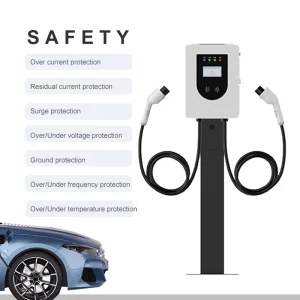
Our chargers feature multiple redundant safety loops: Over-voltage protection (OVP) to prevent overcharging, Over-current protection (OCP) to manage excessive loads, Short-circuit protection (SCP) with auto-recovery, and Over-temperature protection (OTP) which scales back output current if safe operating temperatures are exceeded.